
A critical look at overlanding and road tripping in South Africa, Namibia and Botswana
Researched and written 29 September 2026. Conditions on this route change quickly, and one of them (foot-and-mouth disease in Namibia) changed a week ago. Treat everything below as a starting point and verify the time-sensitive items before you leave.
The short version
If you read nothing else, read this:
- The biggest killer on this route is the road, not lions, crime or disease. Speed on gravel, night driving, fatigue and animals on the tar cause most of the serious harm.
- Crime risk is very uneven. South Africa (especially Gauteng) is where you must be alert. Namibia and Botswana are generally calmer, but not risk-free, and remoteness creates its own dangers.
- You do not need a 4×4 everywhere, but you absolutely need one in some places. Moremi, the Central Kalahari and Chobe’s interior tracks demand proper low-range 4×4. Most of Namibia’s main tourist circuit does not, although higher clearance helps.
- Paperwork is the most common reason trips go wrong at the border. The single most-forgotten document is the letter of authority for a rented or financed vehicle.
- Malaria advice depends on where and when you travel, and 2026 has been a heavier year than usual in parts of the region. See a travel doctor early.
- Self-sufficiency is your safety system. Fuel, water, tyres, recovery gear and a way to call for help matter more than any gadget.
- Foot-and-mouth disease is now actively shaping travel rules, particularly in Namibia. Do not carry meat, dairy or hides across borders, and expect vehicle checks.
1. How reliable is the advice you’re reading? (A reality check)
Before the practical detail, a word on the quality of information out there, because it affects your safety.
Much overlanding advice comes from people who sell trips, vehicles or insurance. Safari operators understandably play down risk (“malaria is low, crime is minimal, just book with us”). Government advisories lean the other way, because their job is to limit liability. The truth usually sits in between, and the best approach is to cross-check both.
Some specific patterns worth knowing:
- “Namibia is very safe.” Broadly true for crime, and repeated by travellers and safari sites alike. But the Canadian government’s advice flags major road safety problems, including fatal crashes linked to speed on gravel and tourists in single-vehicle accidents, and warns that emergency and roadside help is unreliable or absent outside Windhoek. “Safe” here means safe from crime, not safe from the environment.
- “South Africa is dangerous.” Also an oversimplification. The US, UK, Canadian and Australian advisories all describe serious violent crime, with carjacking and smash-and-grab attacks the main risks for drivers, and Gauteng flagged as the hotspot for hijackings. Yet millions of visitors travel without incident every year. The risk is real but manageable and concentrated in particular places, times and behaviours.
- “You need 4×4 for Southern Africa.” Not true as a blanket statement. Tar roads between major towns take any vehicle. Sand, mud and water crossings in the parks are a different matter.
- Dated advice. Some widely shared self-drive safety guides are years old. One popular Botswana guide is from 2018; its core logic holds up, but fees, rules and conditions will not. Prefer sources with a recent update date, and check official ones (park authorities, SARS, your embassy) for anything with a price or a rule attached.
- Forum tips. Tyre-pressure numbers and speed rules posted on travel forums are useful, but they are individual experiences, not engineering advice. Confirm with your tyre supplier or vehicle manual.
2. Borders and paperwork
Tens of thousands of self-drivers cross between South Africa, Namibia and Botswana every year in ordinary vehicles. Borders are rarely the problem. Missing documents are.
The core document set
- Passport with enough validity and blank pages. Namibia’s requirements include several blank pages, so don’t arrive with one spare.
- Driver’s licence. South African licences are recognised in Namibia and Botswana. An International Driving Permit is recommended for everyone, and is required where your licence isn’t in English.
- Vehicle registration papers and proof of ownership.
- Letter of authority (LOA) if the vehicle is rented or financed. This must come from the rental company or your bank, and Namibian officials do check. Botswana practice can also involve a police-stamped affidavit for the owner’s permission, so ask your rental company exactly what they issue.
- Third-party insurance valid for the countries you’ll enter. Foreign vehicles typically buy this at the border.
- Country-of-origin sticker (ZA) on the rear of your vehicle.
- Cash in local currency (Botswana pula, Namibian dollars) for road-access fees, carbon tax and insurance. Budget very roughly R200 to R600 per vehicle per country, according to one recent guide, but fees change, so treat this as an estimate.
- Children: South Africa has strict rules for minors crossing borders, including unabridged birth certificates and parental consent letters where one or both parents are absent. Enforcement and the exact rules have shifted over the years, so confirm the current requirement before you go.
A new rule for foreign-registered vehicles entering South Africa
From 1 June 2026, drivers bringing a foreign-registered vehicle into (or taking one out of) South Africa are reported to need to declare it first on the SARS Traveller Management System. The declaration produces a Temporary Import Permit valid for six months across multiple crossings. This mainly affects people arriving from Namibia, Botswana, Zimbabwe, Mozambique, Lesotho and Eswatini in foreign-registered or foreign-hired vehicles. Only a handful of flagship border posts were confirmed to have full support at launch, so check SARS directly and pre-declare where possible.
Botswana specifics
Vehicles from outside the Southern African Common Customs Area may need a carnet or bill of entry. For SACU-registered vehicles the practical requirements are the permits, fees and insurance above. Expect veterinary fence checkpoints inside the country, where meat and animal products can be confiscated.
Namibia specifics
Most Western nationalities enter visa-free for up to 90 days, but Namibia abolished visa-free entry for several nationalities from 1 April 2025 on reciprocity grounds. If you are not a South African passport holder, check your nationality’s status on the Namibian government’s site, not on a third-party visa service.
3. Health
Malaria
Malaria risk on this route is seasonal and geographic, not country-wide.
| Area | Risk pattern |
|---|---|
| Cape Town, Eastern Cape, most of Namibia’s south and centre (including Etosha, Sossusvlei) | Generally low or none |
| Kruger and northern Limpopo (South Africa) | Present; highest from about November to April |
| Okavango Delta, Chobe, northern Botswana | Seasonal; highest in and after the rains (roughly November to May) |
| Namibia’s Zambezi Region and parts of Kavango | Higher risk |
| Central Kalahari (Botswana) | Generally considered malaria-free |
Two things to be sceptical about:
- Blanket statements. “Kruger needs prophylaxis” and “Kruger risk is low” are both in circulation. Both contain some truth, depending on season and where you sleep. Ask a travel clinic with your exact itinerary and dates.
- 2026 is not a typical year. Case numbers rose earlier this year in Namibia, Botswana and Zimbabwe, and a Swiss travel-medicine committee temporarily widened its prophylaxis recommendation for seasonal-risk areas over the June to August period. That advice was time-limited, but it shows why last year’s blog post may not fit this year’s reality.
Whatever you decide about tablets, bite prevention matters: cover up and use repellent from dusk to dawn (peak mosquito time), and sleep under a net or in screened accommodation. Prophylaxis reduces risk but does not eliminate it. Any unexplained fever during or up to a few weeks after your trip should be treated as possible malaria and reported to a doctor with your travel history.
Other health realities
- Remoteness is the main medical risk. Help can be hours or days away in the Kalahari, the Delta or Namibia’s north-west. Carry a proper first-aid kit, know how to use it, and consider a wilderness first-aid course.
- Insurance with medical evacuation is essential. Check the policy explicitly covers self-driving, unsealed roads and remote areas. Some policies cover collisions with other vehicles or animals but not single-vehicle accidents on gravel, which is exactly how tourists tend to crash.
- Heat and dehydration. One safari guide suggests budgeting at least 5 litres of water per person per day in the dry season. That’s a sensible floor for camping, before cooking and washing.
- Ticks, snakes and insects. Check for ticks after bush walks, wear closed shoes at night, and carry a torch.
- Rabies. Rabies has been confirmed in Cape fur seals around Walvis Bay. Do not approach or handle seals or other wildlife, and seek medical advice after any bite or scratch.
- Water. Treat or filter drinking water in remote areas.
- Vaccinations. Routine vaccines should be current. Yellow fever certificates are needed only if you’re arriving from a yellow-fever-risk country. Ask a travel clinic about hepatitis A and typhoid.
Foot-and-mouth disease (FMD): a health issue for animals that becomes a travel issue for you
FMD is not a serious threat to human health, but it is transforming the rules for travellers.
- South Africa has struggled with widespread outbreaks, and infections were confirmed in Botswana’s north-east earlier this year.
- On 23 September 2026, Namibia confirmed FMD in the Karasburg district of the southern Karas Region, inside the disease-free zone on which its beef exports depend. The government suspended livestock movement nationwide, halted slaughter, and banned the movement of cloven-hoofed animals and products such as meat, milk and hides. Reports describe meat shortages in Windhoek shops.
- What this means for you: avoid carrying meat, dairy or animal products between regions or across borders (including your fridge braai stock), expect vehicle inspections and possible disinfection at veterinary gates, follow every instruction at checkpoints, and don’t walk or drive through livestock areas unnecessarily. Rules are changing daily, so check the latest before entering southern Namibia.
4. Road safety
This is where most trips are won or lost.
Namibia
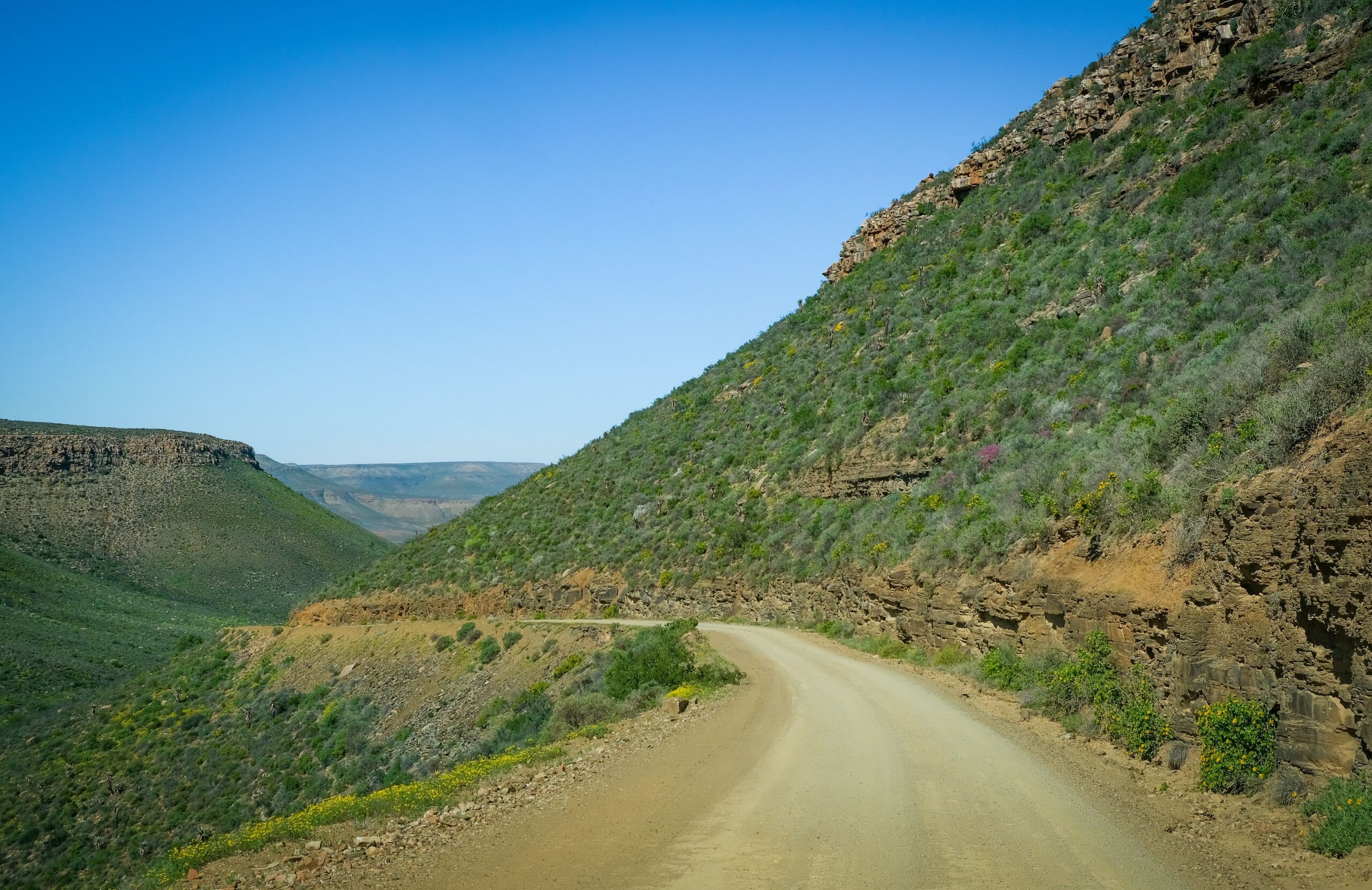
More than 85% of Namibia’s roads are gravel. Most are well graded, which tempts people to drive too fast.
- Speed on gravel is repeatedly named as the leading cause of tourist crashes. Many experienced drivers stay at or below about 80 km/h and slower on corners, crests and descents.
- Distances lie. A drive that looks like 300 km on a map can take 4 to 6 hours on gravel. Plan conservatively.
- Don’t drive at dawn, dusk or night. Kudu, oryx and livestock are hard to see and move unpredictably. A guide writer who was startled by a kudu at dusk summed it up neatly: never again.
- Rain changes everything. Gravel becomes slick from November to March, and washaways can appear without warning.
- Sloping sand shoulders and narrow tar mean drifting off the edge is dangerous.
- Fuel: top up at every opportunity. Long stretches have no fuel, and running dry is a common and avoidable mistake.
Botswana
- Animals on roads, including elephants, cattle, donkeys and goats, are a constant hazard, especially at night. The general advice is not to drive between parks after dark.
- Long tar drives cause fatigue crashes. The A2 highway from the South African border has been the scene of serious crashes, including one in 2024 that killed seven South Africans. Take breaks and don’t drive tired.
- Inside the parks, speed limits are low and deep sand, mud and water crossings are the hazards.
- Fuel gaps: there is no fuel for sale inside the parks, and none along the classic Moremi to Savuti to Chobe sequence. Plan for range, and carry extra (one guide suggests an additional 20-litre jerry can for the Kalahari).
South Africa
- Fatal crashes are common, often involving pedestrians, minibus taxis and excessive speed. Wet roads are slippery.
- Avoid driving after dark where you can, especially on secondary roads.
- Long-distance fatigue on the N1 and N4 corridors is a real killer.
Universal driving habits that help
- Drive well under the limit on unfamiliar surfaces.
- Keep the vehicle in the centre of gravel roads when safe, away from soft edges.
- Never brake hard on gravel. Lift off and steer.
- Wear seatbelts, never drink and drive, and share the driving on long days.
5. Security
South Africa
The advisories from the US, UK, Canada, Australia and New Zealand are consistent: violent crime is serious, and drivers face specific threats.
- Carjacking and armed robbery are concentrated at intersections, traffic lights, driveways and petrol stations, and are worse after dark. Gauteng is regularly flagged.
- Smash-and-grab: valuables visible in the car are the target. Keep bags, phones and laptops out of sight or in the boot, and keep doors locked and windows up in the city.
- Road spiking occurs, where criminals lay spikes to force a stop. If your tyre is damaged, drive on to a safe, well-lit, populated place if you can, rather than stopping in isolation.
- GPS re-routing can send you through unsafe areas. Check alternate routes before following them.
- Airports and their approach roads are known trouble spots. Plan your first drive in daylight.
- No tourist police. Don’t assume one exists.
- Police roadblocks are common. Be polite, carry your documents, and ask for official receipts if you are fined.
- Protests and roadblocks can close roads. Monitor local news.
- Accommodation: choose places with secure parking, and don’t leave a loaded vehicle overnight on the street.
Namibia and Botswana
Crime against travellers is generally lower, and many visitors report feeling far more relaxed than in South Africa. Keep sensible habits anyway:
- Be alert in Windhoek and other cities, particularly at night.
- Don’t leave valuables visible in vehicles, especially in towns and at trailheads.
- Camps in Botswana’s parks are typically unfenced. Elephants, hyenas and other animals walk through at night. Keep food sealed or in the fridge (elephants smell it in the dry season), don’t leave your tent in the dark, and never approach animals on foot.
- Wild camping in Botswana’s national parks is not allowed. Book campsites in advance, often months ahead in peak season.
Your personal security kit
- Photocopies and phone photos of passports, permits and insurance, kept separately from the originals.
- A satellite communicator or tracker for remote areas (mobile coverage disappears quickly).
- Tell someone your route and check-in times.
- A second vehicle when crossing the most remote stretches. Some guides recommend at least two vehicles for the southern Central Kalahari and for crossing the entire reserve. That advice comes from an older source, but the logic (a breakdown alone is far more dangerous) is timeless.
6. Vehicle requirements and kit
Which vehicle for which route?
| Route | Vehicle needed |
|---|---|
| Tar roads between major towns (all three countries) | Any reliable vehicle |
| Namibia’s main tourist circuit (gravel) | High clearance recommended; 4×4 is a safety margin, not always a necessity |
| Moremi, Chobe interior, Savuti | Proper 4×4 with low range, essential |
| Central Kalahari and Makgadikgadi | Proper 4×4, experience, and ideally a second vehicle |
| Wet season (roughly November to April) | Some parks become impassable or closed to self-drivers; muddy pans should be avoided |
Essentials
- Two full-size spare wheels for remote routes, plus a tyre repair kit, a compressor and a pressure gauge. Punctures are the most common mechanical problem on gravel.
- Correct tyre pressure for the surface. Lower pressure helps in sand and on rough gravel, but check the right numbers for your tyres and load.
- Recovery gear: a recovery strap, shackles, a shovel, traction boards and a jack that works on soft ground.
- Fuel range: know your real consumption when loaded, and carry extra where needed.
- Water and food for several days beyond your plan. There are no shops in Botswana’s parks.
- Navigation: offline maps and a paper backup.
- Communication: satellite communicator or messenger.
- Basic tools and spares: fan belt, fuses, hoses, oil, coolant and a good torch.
- Emergency items: warning triangle, fire extinguisher, first-aid kit and reflective material. Requirements differ by country, so confirm current rules.
- Fridge or sealed storage for food to keep animals away from your camp.
Water crossings and insurance
Botswana’s Khwai and Delta areas are famous for water crossings. Standard insurance often excludes water damage unless it results from a flash flood, so you may carry the whole cost of a drowned engine. If you aren’t comfortable, wait for another vehicle or turn around. Check whether your rental or insurance policy covers tyres, windscreens, undercarriage and unsealed-road accidents, because these are the usual gaps.
Renting versus bringing your own
Cross-border permission is the critical issue with rental vehicles. Confirm in writing that the rental company allows travel to each country on your route and will supply the letter of authority. Also account for the true cost of collection: a cheaper vehicle that adds days of driving isn’t cheaper.
7. Quick country cheat sheet
| South Africa | Namibia | Botswana | |
|---|---|---|---|
| Main risk | Violent crime targeting drivers; road crashes | Gravel-road crashes; remoteness; animals | Remoteness; wildlife; sand and water; fuel gaps |
| Crime level | High, concentrated by area and time | Low (city caution) | Low |
| Driving side | Left | Left | Left |
| Malaria | Kruger, northern Limpopo | Zambezi, Kavango, north | Okavango, Chobe, north |
| 4×4 needed? | Rarely | Recommended on gravel, not always essential | Essential in parks |
| Current headline | New vehicle-declaration rule for foreign-registered vehicles (from 1 June 2026) | FMD outbreak confirmed 23 Sept 2026; movement restrictions | FMD confirmed earlier in 2026; vet fences and checks |
8. Pre-departure checklist
Three months out
- Book a travel-health clinic appointment and discuss malaria advice for your dates and route.
- Book campsites in Botswana and Namibia’s popular parks.
- Confirm entry rules for your nationality on official government sites.
One month out
- Arrange insurance (medical, evacuation, vehicle) and read the exclusions.
- Get your letter of authority, IDP and copies of all documents.
- Service the vehicle, check tyres, and pack recovery gear.
One week out
- Check for FMD restrictions, border-post changes, road closures and weather.
- Declare foreign-registered vehicles on the SARS system if applicable.
- Share your itinerary with someone at home.
At every border
- Have documents, cash and copies ready. Do not carry meat, dairy or animal products. Ask for receipts.
The bottom line
The route through South Africa, Namibia and Botswana is one of the great road trips on earth, and it rewards preparation over bravado. The three things that will most shape your experience are how you drive (slowly, in daylight, with buffers), how self-sufficient you are (fuel, water, tyres, communication), and how current your information is (especially now, with foot-and-mouth restrictions moving fast).
Be sceptical of anyone who says it’s all perfectly safe, and equally of anyone who says it’s too dangerous to attempt. Both are selling something.
Go well, and go prepared.
Sources and verification
This article draws on recent (2025 to 2026) government advisories and travel and health resources, including the Canadian, Australian, UK and US government travel advice for South Africa and Namibia; the Botswana Tourism Organisation entry-formalities page; recent border-crossing guides (PathRoam, Drive South Africa, Fast Track Auto Solutions); reporting on the South African Revenue Service vehicle-declaration rule; news coverage and the UK government’s veterinary notices on Namibia’s September 2026 foot-and-mouth outbreak; regional foot-and-mouth reporting (CCARDESA); malaria guidance from SANParks, Swiss travel-medicine reporting (HealthyTravel) and safari operators; and self-drive guides for Botswana and Namibia. Many practical guides are written by commercial operators, so weigh their claims accordingly.
Verify before you travel: SARS (vehicle declarations), your embassy’s advisory, the Namibian and Botswana immigration and veterinary authorities, park authorities for campsite and closure information, and a travel-health clinic for malaria advice. Fees, rules and disease situations change without notice.
This article is general information, not medical, legal or insurance advice.